
Mother Johanna and her brass pot
Image slideshow
Description
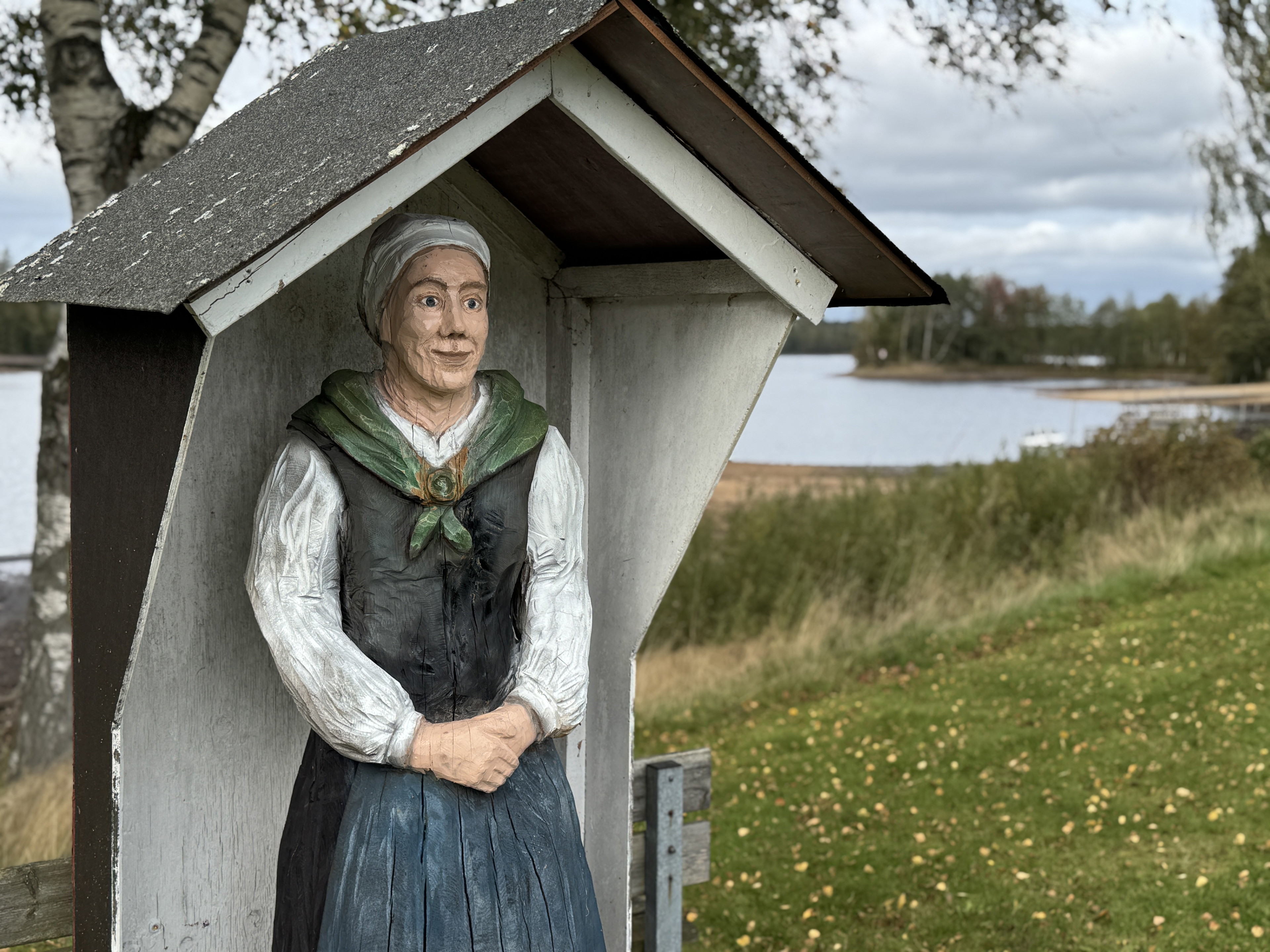
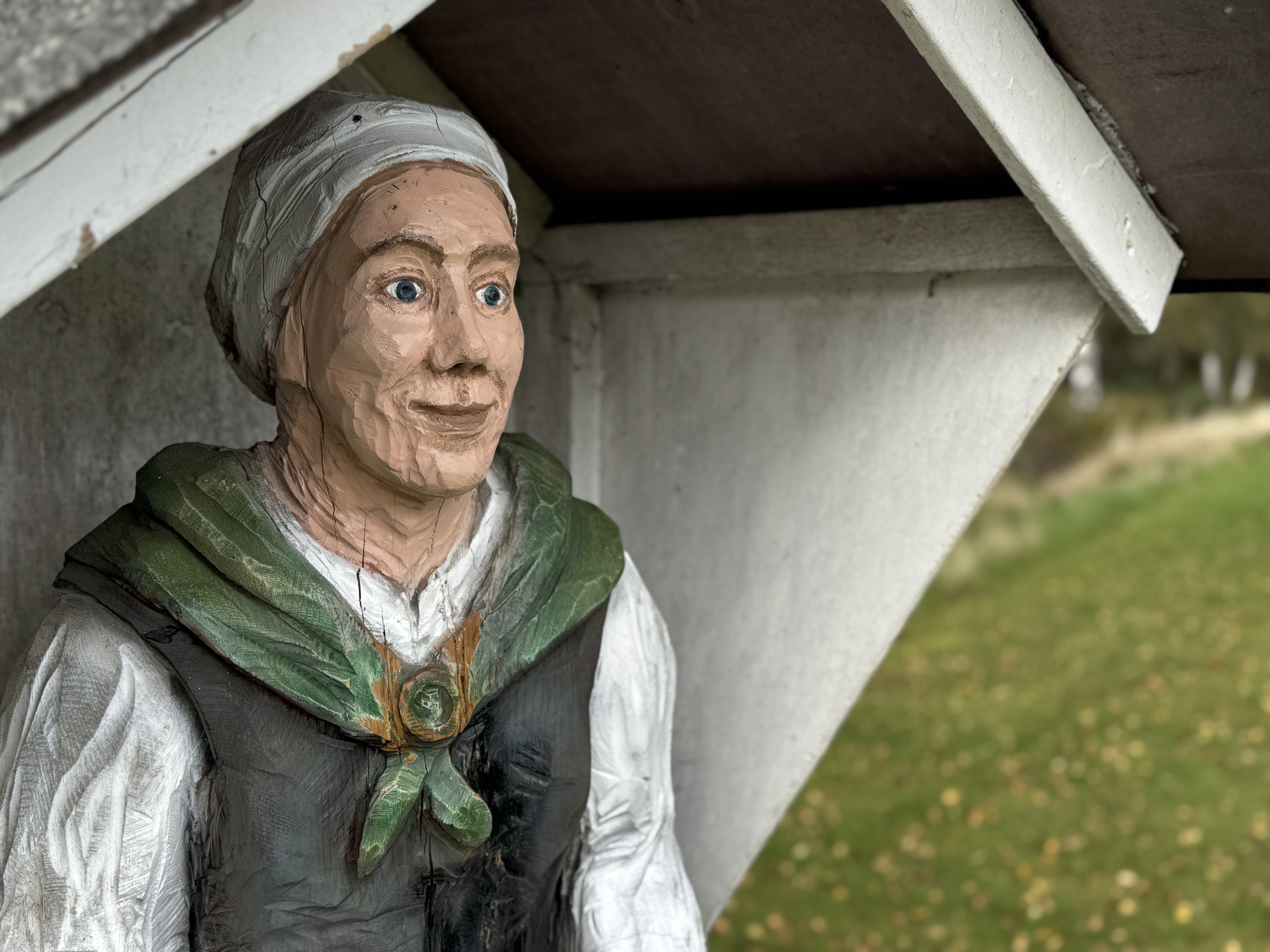
At the southern end of Lake Fegen, in the heart of the village of Fegen, stands a wooden sculpture depicting a woman.
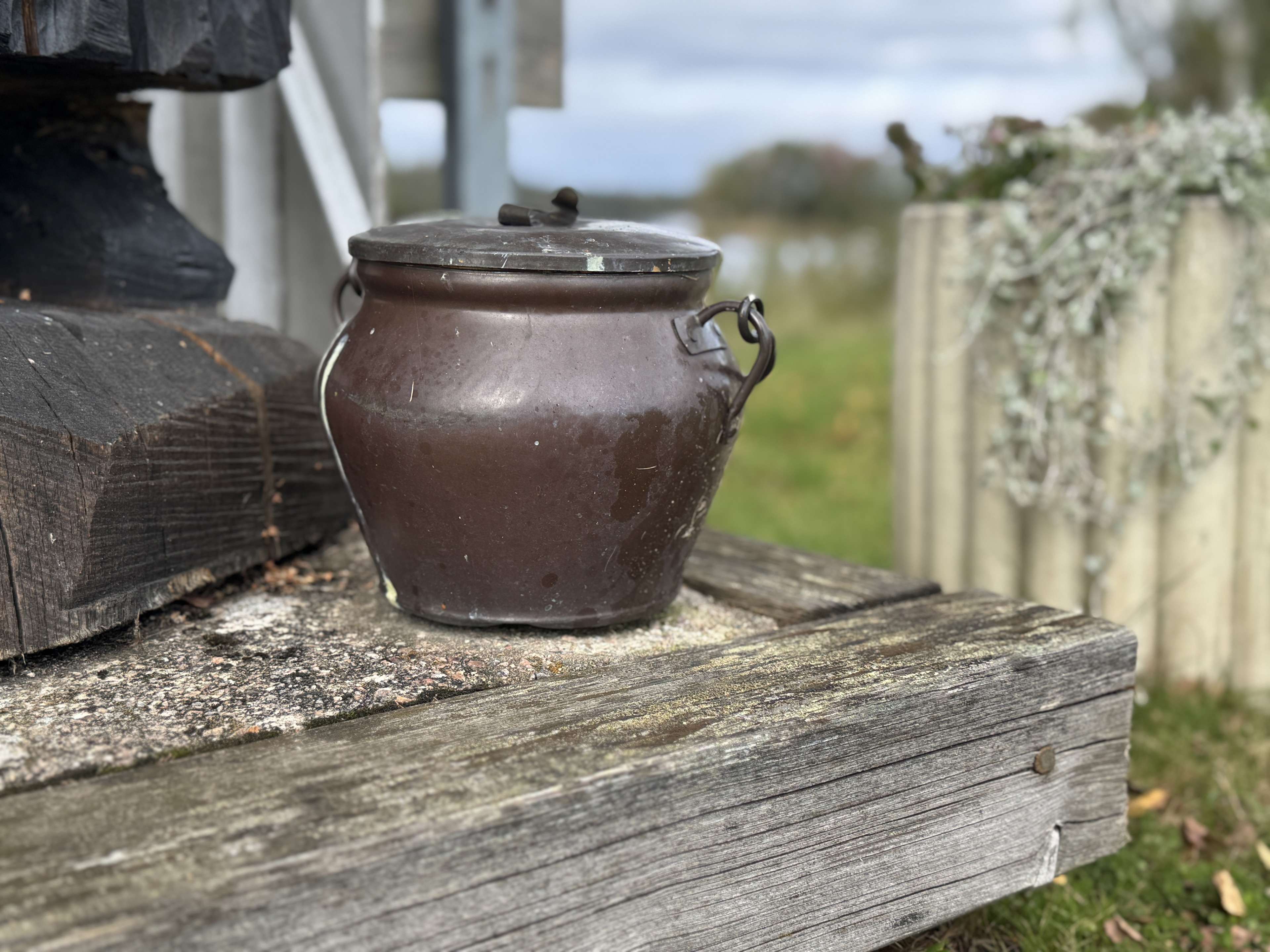
Next to her stands a brass pot. This is Mother Johanna and her brass pot. Together they stand as a reminder of the famine that took place in the area in 1868–1869.
The crop failure of 1868 hit the barren, rocky countryside around Lake Fegen hard. There was almost no rain, and the crops dried up. People went hungry, animals had to be slaughtered out of necessity, and bark was mixed into bread so that the food would last longer.
In 1869, the hardship became even worse. The seed grain that should have been saved for the next sowing had to be eaten so that people could survive. Money had run out, and the previous year's crop failure had caused the price of seed grain to rise.
At Ödgärdet, just north of Fegen, Pelle lived with his wife Anna Greta and their son. One evening there was no food left, and the boy had to go to bed hungry. Everything of value had already been pawned. All that remained was the brass pot that Pelle had received from his mother. Her wish was that the pot should never leave the home.
Early the next morning, Pelle rowed across the lake to pawn the pot in exchange for some flour. Fishing had been poor for a long time, but he brought his fishing gear, the svirvel, with him. The lake was still and shrouded in mist. Almost immediately, he got a bite. As he approached Sotanäs, several large pike and five perch lay in the boat.
The lieutenant at Sotanäs caught sight of the catch and wanted the fish. In exchange, Pelle received flour, cheese, bread and butter. His mother's old brass pot was filled with milk.
Pelle rowed home with the milk sloshing in the pot. Together with Anna Greta, he laid out the food and woke their son.
“And when he saw all this wonderful food on the table, he leapt out of bed and down onto the floor and began dancing in just his shirt with joy.”
Pelle had never before experienced such joy in their home. He promised that his mother's brass pot would never leave the home for as long as he lived.
Together, the sculpture and the pot serve as a reminder of the hardship that once prevailed here.
The story was written down by the author August Bondeson, who was Pelle's cousin.